Can a Backyard Pod Pay for Itself?
Real ROI Scenarios for 2026
If you’re considering a backyard pod, one question matters more than aesthetics, layout, or finishes:
Can it actually pay for itself?
In 2026, more homeowners in high-growth markets are looking at backyard pods not just as lifestyle upgrades — but as income-producing, value-adding assets.
Let’s break down the real numbers and realistic ROI scenarios.
What Does “Pay for Itself” Actually Mean?
When homeowners ask if a backyard pod pays for itself, they usually mean one of four things:
💰 It generates rental income
🏡 It increases property resale value
💼 It offsets business or work-from-home costs
🧘 It replaces recurring expenses (gym, coworking, studio space)
The return doesn’t always come from one source. Often, it’s a stacked ROI effect.
Scenario 1: Rental Income (Long-Term or Short-Term)
Best For:
Guest suite layouts
Backyard ADU-style pods
Separate entrance + bathroom units
2026 Rental Reality
In strong rental markets, small detached backyard units can generate:
$1,200–$2,500/month (long-term lease depending on city)
Higher seasonal revenue for short-term rentals (if allowed)
Example Calculation
Let’s say your backyard pod costs $95,000 turnkey.
If it rents for $1,800/month:
$21,600 per year
Payback timeline ≈ 4.5 years (before taxes/expenses)
After that? It becomes a cash-flowing asset.
Key Considerations
Local zoning & ADU rules
Utilities setup
Insurance and maintenance
HOA restrictions
Scenario 2: Property Value Increase
One of the most overlooked ROI drivers is resale value.
Buyers increasingly search for:
Homes with backyard offices
Detached studios
Rental-ready ADUs
Flexible flex spaces
How Much Value Can It Add?
While every market differs, detached finished structures often:
Increase buyer appeal
Reduce time on market
Add functional square footage without expanding the main home
In competitive markets, a well-designed backyard pod can:
Recover a significant portion of its build cost
In some cases, exceed build cost due to demand for move-in-ready flexibility
In 2026, buyers want:
Work-from-home separation
Multigenerational flexibility
Rental potential built in
A finished backyard pod checks all three boxes.
Scenario 3: Work-From-Home Cost Offsets
If you’re self-employed or running a business from home, your backyard pod may function as:
A dedicated office
A client-meeting space
A production studio
A wellness practice room
Potential Financial Impact
Eliminate co-working memberships ($200–$400/month)
Reduce commute costs (gas, parking, time)
Possible home office tax advantages (consult your CPA)
Even conservatively:
$300/month saved = $3,600/year
Over 5 years = $18,000 in offset costs
Now layer that onto potential property value increase.
Scenario 4: Replacing Recurring Lifestyle Expenses
Many homeowners use backyard pods as:
🏋️ Home gym
🎨 Creative studio
🎵 Music room
🎮 Golf simulator room
🧘 Wellness or yoga space
Let’s say:
Gym membership: $150/month
Boutique studio classes: $200/month
Commute time saved: intangible but real
That’s $4,200 per year in lifestyle savings — plus daily convenience.
The ROI isn’t just financial.
It’s routine, time, and consistency.
The Stacked ROI Model
(Most Realistic)
The strongest ROI doesn’t come from just one strategy.
It comes from stacking:
✔ Property value boost
✔ Work-from-home savings
✔ Rental income (even temporary)
✔ Lifestyle cost elimination
For many homeowners in 2026, the question shifts from:
“Will it pay for itself?”
To:
“How many ways can this structure return value?”
It depends on your usage:
Use Case and Approximate ROI Timeline
Long-term rental: 4–7 years
Short-term rental: 3–6 years (market dependent)
Home office only: Indirect ROI (value + savings)
Gym/wellness: Lifestyle + cost replacement
Every market is different.
But flexible backyard structures consistently outperform single-purpose additions.
How Long Does It Take to Break Even?
What Impacts Backyard Pod ROI Most?
If your goal is maximizing return, focus on:
1. Layout Versatility
Can it convert from office → rental → guest suite?
2. Climate Control
Year-round usability protects long-term value.
3. Permitting & Compliance
Legal structures maintain resale value.
4. Design Quality
Buyers pay more for finished, integrated structures — not “shed conversions.”
2026 Outlook: Why Backyard Pods Are Growing
Homeowners are prioritizing:
Income flexibility
Remote work permanence
Multigenerational living
Higher land utilization
Detached backyard pods sit at the intersection of all four trends.
They’re no longer seen as “extra.”
They’re viewed as infrastructure.
So… Can a Backyard Pod Pay for Itself?
Yes — if used strategically.
Not every pod is purely income-driven.
But most provide:
Measurable financial offsets
Tangible property value increase
Lifestyle returns that compound daily
The smartest buyers in 2026 aren’t asking if it’s an expense.
They’re asking:
“How do I structure this to maximize return?”
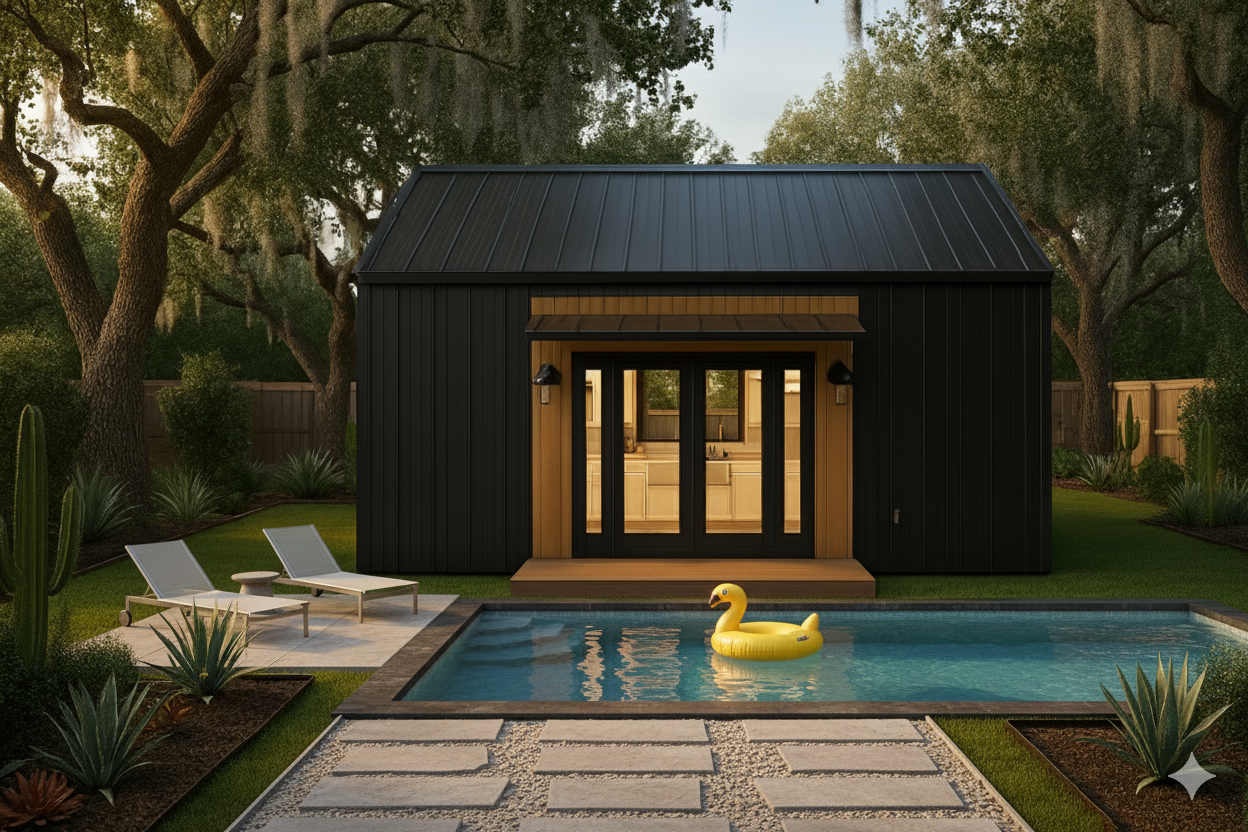
POD STUDIOS
Designed to maximize functionality and comfort in compact footprints. Whether you need a home office, a private guest suite, or a rental unit that generates income, these turnkey spaces deliver flexibility and long-term value. Available in multiple layouts—you can choose the design that best fits your property and lifestyle.
Office Client Testimonial:
Which Pod Would You Use First?
Home office?
Guest suite?
Gym?
Income unit?
Flex studio?
Your backyard already has the space.
Now it just needs purpose.
FAQs
Are backyard pods a good investment in 2026?
1
In markets with strong rental demand and remote work prevalence, backyard pods offer income potential, resale value growth, and lifestyle savings.
How much rental income can a backyard ADU generate?
2
Rental income varies by location but can range from $1,200–$2,500/month for detached backyard units.
Do backyard pods increase property value?
3
Well-designed, permitted detached structures often increase buyer appeal and functional square footage.
How long does it take for a backyard pod to pay for itself?
4
If used as a rental, break-even timelines can range between 4–7 years depending on cost and income.